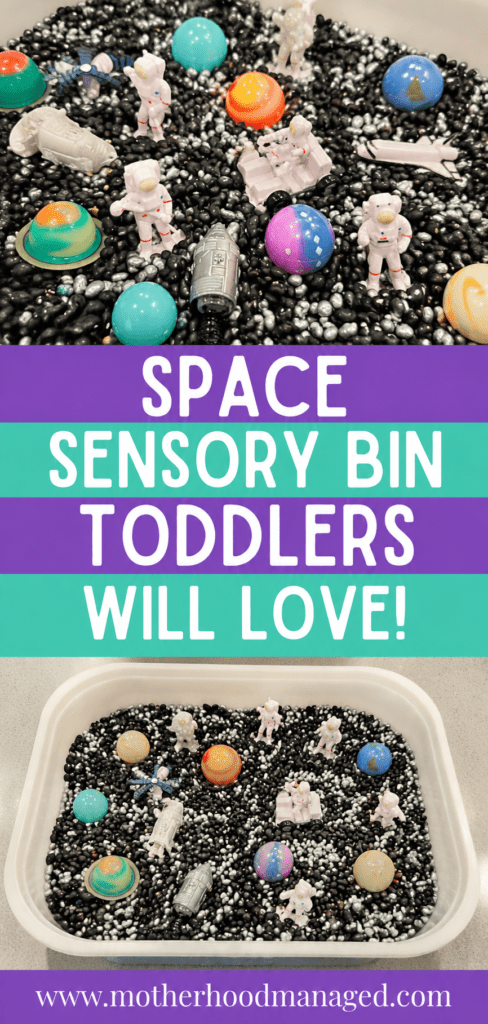
When my daughter started all sorts of interesting questions about space, I decided it was a great time to dive into creating some activities that are space related to support her curiosity. One of the first things I thought is that we should make a fun space sensory bin! I love the way sensory bins help her regulate, learn, build her fine motor skills, and foster independent play.
This sensory bin is a great fit for toddlers who are deep in a space obsession right now, for preschool teachers building out a space themed week, or for any mom who just wants a new sensory play idea in her back pocket for a slow afternoon.
This post may contain affiliate links, which means I may earn a small commission at no extra cost to you if you make a purchase. All opinions are my own.
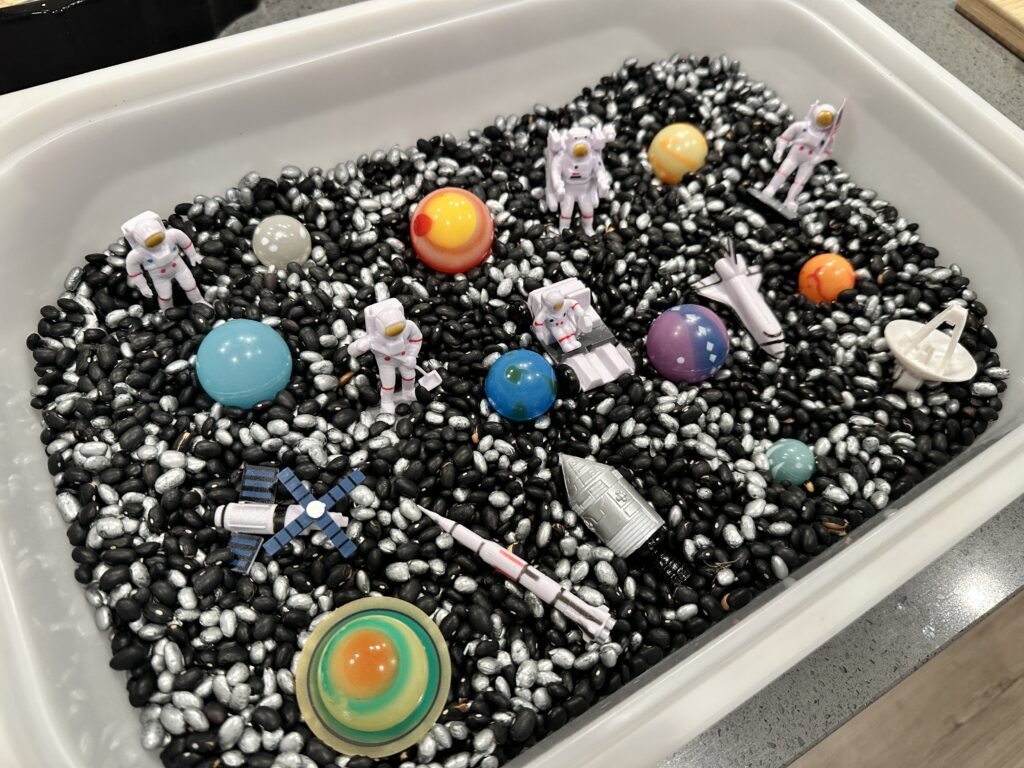
Supplies List
This sensory bin is pretty simple as far as supplies go! You will need:
- Enough dry black beans to fill your bin enough to play (I used about 4 pounds)
- Silver paint
- Gallon size ziploc bag
- Glow in the dark planets
- Astronaut figurines / small space toys
- Sensory bins tools like cups, scoops, spoons, etc.
You can easily find all of the supplies for this space sensory bin HERE!
Step-by-Step Tutorial
Here are the quick and easy steps for putting together this bin. The longest part is just letting the silver paint dry on the beans, otherwise it comes together in minutes!
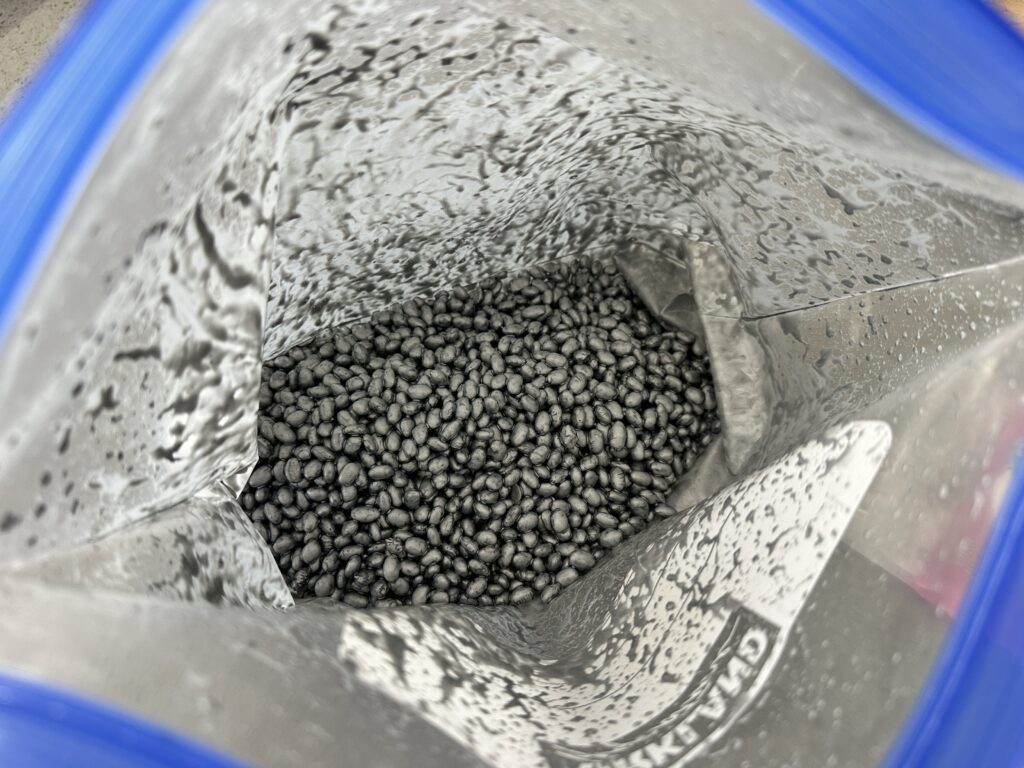
Step 1: Paint Your Beans
Pour about a quarter of your beans into a gallon ziploc bag. Squeeze as much paint as you think will cover the beans along with a small splash of water to thin out the paint – start with about a teaspoon. Start with less because you an always add more and too much paint will actually make it not stick as well to the beans. Close the bag and shake well! This is a great time to get your kids involved. Open the bag and check that you have good coverage and add a little more paint if needed.
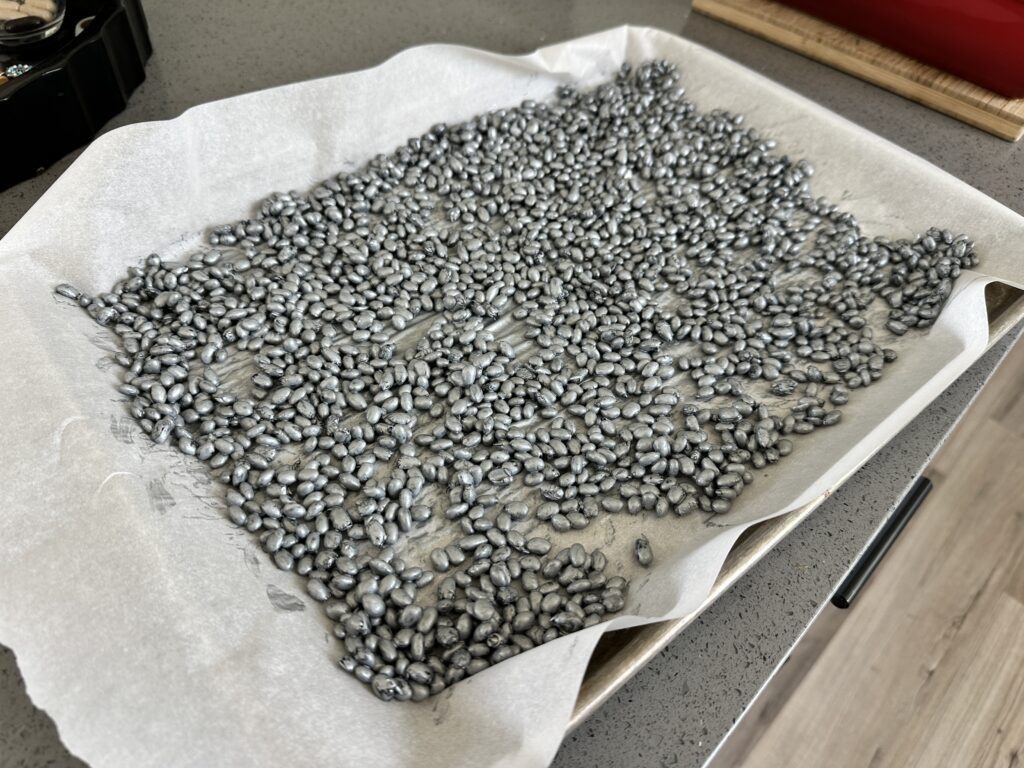
Step 2: Let the Beans Dry
Next, put a piece of parchment paper on a cookie sheet and pour out the wet beans onto the sheet. Spread the beans out well and then let them dry for a couple of hours. Then start moving the beans around with your hands and breaking up any clumps every hour or so if you can. This just helps the beans not stick together. Ideally, let the paint cure overnight so that it is fully dry before putting it into your bin.
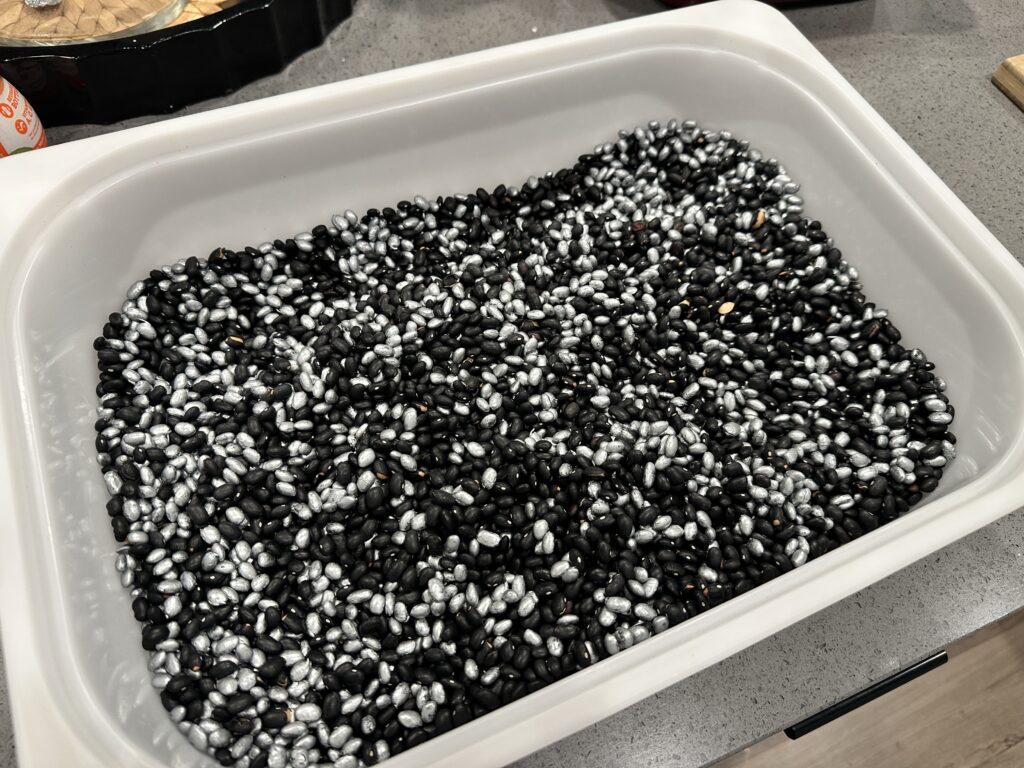
Step 3: Assemble Your Bin
Finally, you will pour in the black beans and silver beans and mix together for your sensory bin filler base. Then add in your planets, astronauts, space figures, and any sensory bin tools your kids enjoy for your bin. Don’t overpack it with too many tools and figurines because that can make independent play more difficult! Less is almost always more!
Frequently Asked Questions About Sensory Bins
What do sensory bins do for kids?
Sensory bins build real skills disguised as play. Scooping and pouring strengthen the fine motor muscles kids need for writing and scissors, while different textures help their nervous system learn to regulate sensory input. And because there’s no “right way” to play, bins are one of the best ways to build independent play skills, letting kids direct their own activity instead of needing you to entertain them. You can read more about the benefits HERE.
At what age can I start sensory bins with my kids?
Most sensory bins work well starting around 18 months to 2 years, once a kid is past the worst of the everything-goes-in-the-mouth stage. For babies and younger toddlers still mouthing things, use edible bases like dry oats, cooked pasta, or shredded coconut instead of rice or beans. There’s no upper age limit. My older kids still get pulled into the bin when I make a new one.
How do I keep it from becoming a huge mess?
Here are some ideas to try – set the bin on a fitted sheet, shower curtain, or a cheap vinyl tablecloth so cleanup is just gathering the corners. A large under-bed storage bin with high sides also helps more than a flat tray. Doing it outside or in the bathtub removes the stress entirely. At first, you will need to supervise and enforce the rules of playing with the bin, but it is worth the time investment for building independent play skills!